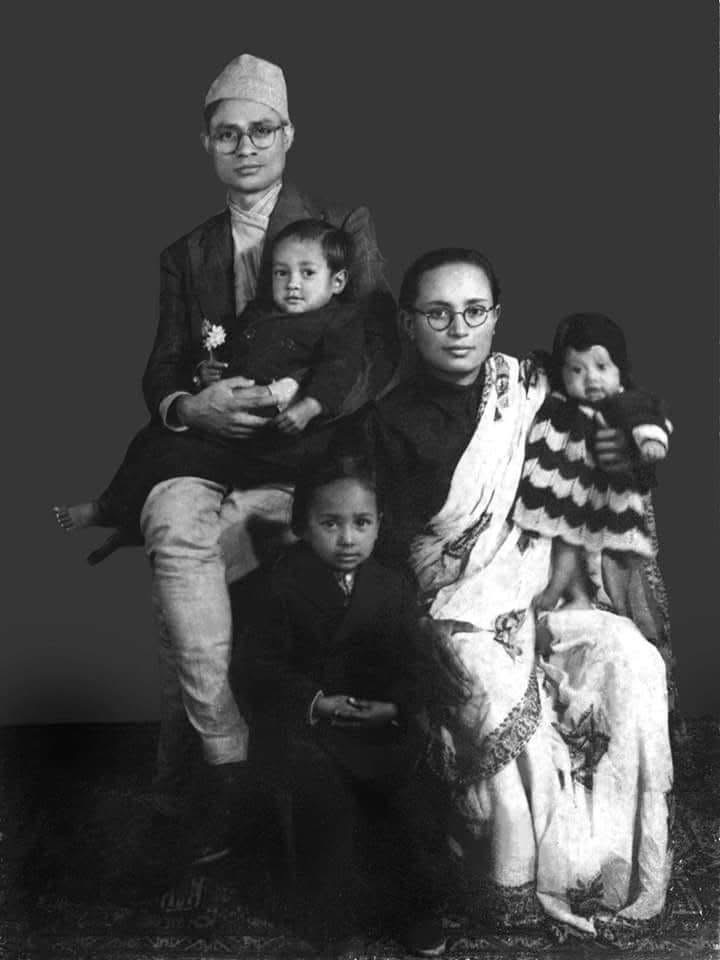
The story of our mother, Heera Devi Yami, is a profound testament to the human spirit and a reflection of the systemic cruelty of the Rana Dynasty (1846–1951). The oppression she faced was not a series of isolated misfortunes, but part of a broader socio-political system designed to suppress dissent by targeting entire families.
Our mother lived a life defined by courage, sacrifice, and quiet resilience. She endured immense hardships—political turmoil, financial struggles, and deep personal suffering—at a time when women already faced severe social and structural barriers. We witnessed her strength throughout her life.
The Strategy of Social Ostracization
One of the most effective tools used by the Rana regime against political activists like Dharma Ratna Yami was the weaponization of social fear. During this period, our mother’s health was severely compromised after she was arrested during pregnancy; she faced further complications during childbirth and the postnatal phase.
In this vulnerable time, the fear and repression of the Rana system meant that many were afraid to associate with or support her, leaving her largely isolated when she needed care and compassion most. The regime did not only punish political opponents; it actively discouraged neighbors, shopkeepers, and even relatives from offering help. In this way, isolation itself became a form of punishment.
Our father, Dharma Ratna Yami, was frequently imprisoned, and his absence added significantly to her burden. She had to endure failing health while holding the family together amid an atmosphere of uncertainty and fear. Despite everything, our mother never lost her dignity, compassion, or inner strength. She faced suffering without bitterness and continued to nurture and protect her children under extremely difficult circumstances, becoming the ultimate source of resilience for our family.
Physical and Psychological Hardship
The arrest of a pregnant political activist was not only a violation of human dignity but also a calculated method used to weaken resistance. Prisons during the Rana era were notorious for being unhygienic, overcrowded, and devoid of basic care. For a pregnant woman, such conditions were not just harsh—they were life-threatening. The intent was to break families both psychologically and physically.
Three of her children—Dharma, Vidhan, and Timila—were deeply affected by the instability, separation, and emotional trauma of those early years, starting from the experiences surrounding pregnancy, birth and arrests. The impact of those conditions remained with the family for a long time.
Economic and Social Strangulation
The Rana system maintained control through a rigid feudal structure. When political activists were imprisoned, their families often faced economic collapse. Property was seized, livelihoods were restricted, and social boycotts were encouraged. Without a stable income and facing society’s fear-driven isolation, women like Heera Devi were left to endure state-imposed poverty. Because the legal and social structures of the time offered women very little agency, she fought a dual struggle: one against political oppression and another against deeply rooted patriarchy.
A Legacy of Resistance Through Values
The Rana regime intended to break families and erase dissent; however, in our mother’s case, the opposite occurred. She transformed suffering into a lifelong commitment to dignity, equality, and education, turning hardship into a foundation for future generations.
She taught us to face adversity with courage, to remain kind and compassionate, and to help those in need. She believed deeply in human dignity and raised us to respect all people without discrimination—regardless of gender, caste, or economic background.
Above all, she believed in the power of education. She often said, “Education is something no one can ever take away from you.” In an era where education was restricted to maintain control over society, her insistence on learning became a quiet but powerful act of resistance.
Guided by her sacrifices and teachings, we worked hard, overcame many struggles, and remained committed to our studies. Today, we stand on our own feet because of her strength, vision, and unwavering belief in us. On this Mother’s Day, we remember her not only for the hardships she endured but for the love, wisdom, and moral courage she instilled in us all. Her legacy continues to guide our lives every day.
We love you, Mom.