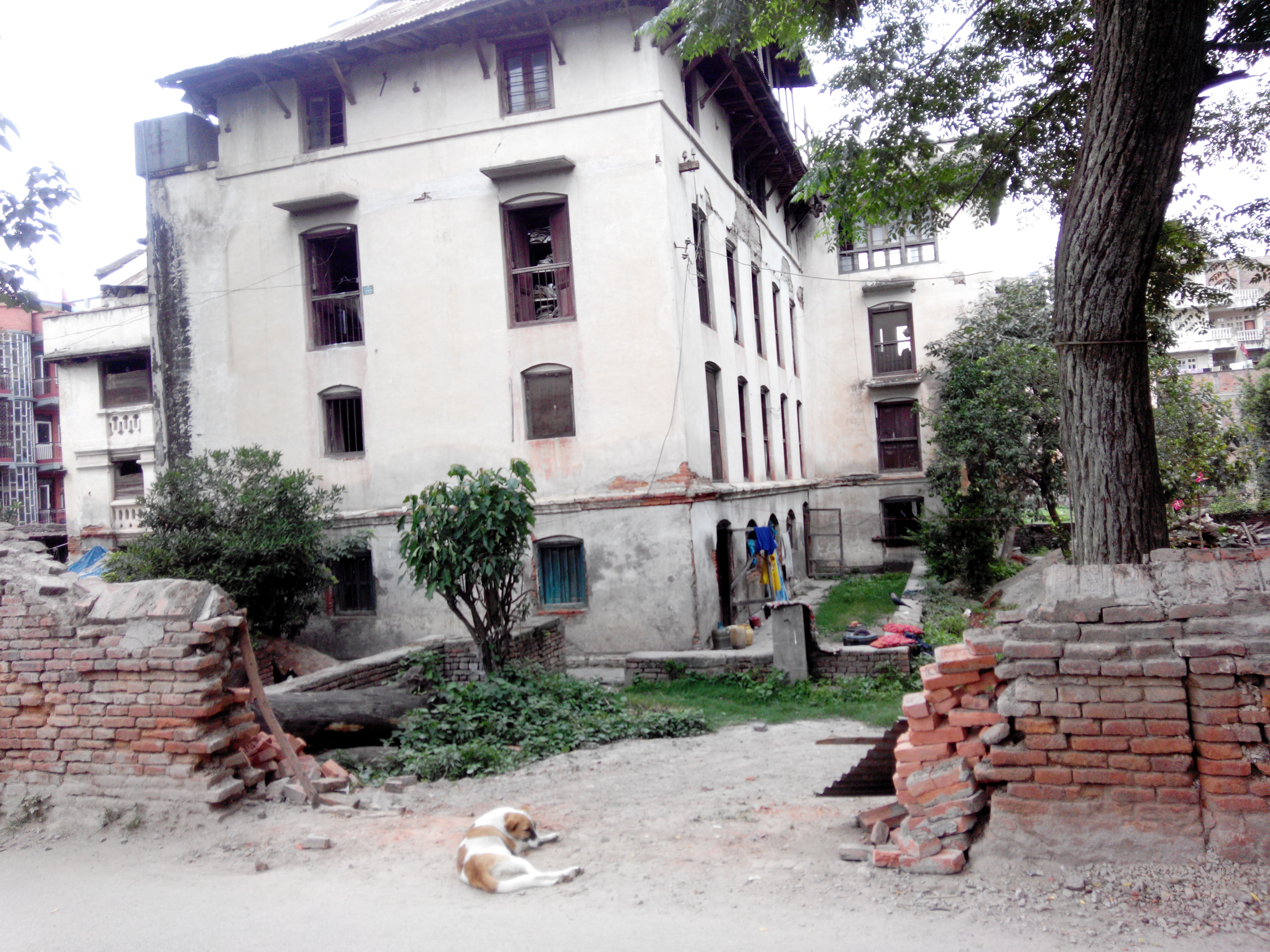
Today Nepal faces several sources of uncertainty at once: natural disasters, climate-related risks, economic insecurity, rapid technological change, and the psychological consequences of all of them. We must prepare not only our buildings and infrastructure, but also the human mind. Disasters do not end when the earthquake stops shaking, the floodwater recedes, or the headlines disappear. Sometimes the deepest damage continues inside the human mind. Fear can remain. Trauma can remain. Grief can remain. Economic insecurity can remain. And when these pressures accumulate—especially in a society already struggling with limited mental-health services—the consequences can extend from individuals to families and entire communities.
A childhood memory of fear
One of my strongest childhood memories goes back to Bikram Samvat 2018. At that time, frightening stories were circulating that a devastating earthquake would occur that year. People were terrified. Many families were sleeping in tents because they believed that remaining inside their houses was unsafe. My father, Dharma Ratna Yami, strongly opposed this fear-mongering. He openly said that presenting an earthquake prediction as certainty, and frightening ordinary people with it, was exploitation. He went around telling people not to blindly believe these frightening stories.
His message was simple: frightening people for personal benefit is not an ethical response to disaster risk. The people promoting these stories became extremely angry with him. But he continued speaking. He kept saying that we must not surrender our judgment to fear.
Seven children on the fourth floor
I remember how deeply this fear had entered our community. Our family lived in a building, and all seven children used to sleep on the fourth floor. Around us were many tents occupied by frightened people. One night, some of those people came to our home. They told my parents: “At least save your seven children. If you want to die in the earthquake, then die—but send the seven children with us. We will keep them safely in our tents.”
Imagine a mother hearing that her seven children might die if she did not immediately surrender them to someone else’s protection. My mother, Heera Devi Yami, became extremely angry. She told them to get lost, and she never allowed us to sleep in those tents during those fearful days.
Looking back today, I understand the extraordinary strength of my parents. My father confronted the ideas that were creating fear. My mother confronted the fear when it entered our home. They taught us something that remains deeply relevant today: do not deny danger, and do not manufacture danger either. Understand the evidence, and prepare intelligently. The fear surrounding earthquakes in 2018—viral hoaxes. Local astrologers (jyotishis), fake tantriks, and self-proclaimed seers capitalized on the panic by issuing ominous warnings. They often claimed that specific planetary alignments (graha dosha) threatened catastrophic tremors that could only be warded off through expensive personalized or community rituals (poojas, hhavans, and shanti yagyas). Demand spiked for specialized ritual items—such as specific gems, amulets (taaviz), protective rudraksha beads, and sacrificial offerings—sold at inflated prices to desperate households looking for any sense of psychological control. In many neighborhoods, opportunists organized large-scale community prayers under the pretense of collective protection, soliciting donations and charging fees for priest services.
Fear is a biological survival system
From the perspective of neuroscience, fear is not weakness. Fear is a sophisticated survival mechanism. When the brain perceives danger, threat-detection and salience systems rapidly direct attention toward possible threats. The autonomic nervous system prepares the body for action, and stress hormones help mobilize energy. This is extremely useful when the danger is real.
But there is a problem when fear is continuously activated by uncertainty, rumors, catastrophic predictions, or repeated frightening messages. The brain can begin operating as though danger is always approaching. People may become hypervigilant. They may repeatedly check for signs of danger. They may lose sleep. They may become irritable or emotionally exhausted, and their attention can become dominated by threatening information. The more frightening information they consume, the more convincing the danger can feel. This creates a vicious cycle—which is why responsible communication during disasters is so important.
Fear can become a business
Fear also creates vulnerability. When people are frightened and uncertain, they naturally look for someone who can offer them certainty. Someone may say: “I know what will happen.” Then: “Only this ritual can protect you.” Then: “You must do it immediately.”
The frightened person may pay for the ritual. The ritual may temporarily reduce anxiety, and that temporary relief can reinforce the behavior: I was frightened → I performed the ritual → I felt safer. The person may then conclude that the ritual protected them—even though the reduction in anxiety does not demonstrate that the ritual changed the physical risk. This is an important psychological distinction.
Prayer, meditation, and spiritual practices may provide genuine emotional comfort, meaning, community, and hope. But comfort should not be falsely presented as scientific protection from an earthquake, flood, or other natural hazard. Respect people’s beliefs, but evaluate factual claims by evidence.
Lessons from Disasters: Information Infrastructure, Science, and Mental Health
When technological uncertainty is followed by a catastrophic natural disaster, the psychological burden can become even greater. Recent events, such as the Rasuwa flood disaster and the 2015 Gorkha earthquake, remind us that people can lose homes, livelihoods, family members, communities, and their basic sense of safety in an instant.
Nepal’s post-disaster experience demonstrates an essential truth: after a crisis, accurate information itself becomes a vital form of emergency infrastructure. When fear runs high and reliable data is scarce, rumors and misinformation spread rapidly. The lesson is profound—disaster communication will either mitigate fear or amplify it. Governments, media outlets, religious and community leaders, and digital platforms all bear an ethical responsibility. They must not manufacture certainty where science sees uncertainty, transform rumors into predictions, turn predictions into facts, or exploit a vulnerable public.
Mythological Frameworks, Language, and Literacy Barriers
My firsthand experience clearing debris, clearing blocked roads, and assisting victims in the hard-hit historic core of the Kathmandu Valley after the 2015 earthquake revealed a striking socio-psychological reality. When faced with acute trauma and structural devastation, communities often lean on religious and mythological frameworks to cope emotionally, displacing scientific reasoning.
Speaking directly to elderly women in the core Newar community exposed the deep structural roots of this response. Many of these women spoke only Nepal Bhasa and could not understand the official national language. In their childhood, social norms and state policies actively banned them from receiving a formal education. Cut off from modern schooling, they were never given access to the concepts of geology or physics. Tectonic plate movements were entirely foreign; what they possessed instead were the inherited tools of their upbringing—rituals, poojas, offerings, and donations. For them, performing rituals was not mere superstition, but their only functional means of exercising agency amidst terrifying destruction.
This psychological dynamic repeated during the collapsed heritage structures. Many interpreted the falling of sacred temples as deity intervention—believing the gods "absorbed the weight of the damage" to protect residential homes. Even in Banepa, where five overhead water tanks collapsed and killed two people, local residents rationalized the tragedy by believing nearby temples absorbed the brunt of the impact, keeping casualties lower than they could have been. In moments of extreme vulnerability, people default to supernatural narratives because they offer immediate narrative comfort, even when they defy physical laws.
Unpacking the Science Behind Catastrophe: The Rasuwa Flood
To prevent superstition from completely displacing physical reality, public communication must clearly articulate the actual scientific mechanics of disasters. In the Rasuwa flash flood along the Bhotekoshi and Trishuli river systems, the devastation was driven by specific geological and climatic factors: A massive section of bedrock and glacier ice (roughly 600 meters wide) failed at an altitude of approximately 5,200 meters, releasing an estimated 100 to 200 million cubic meters of debris down the mountain. The sheer kinetic force of the falling mountain face was so immense that its ground impact registered as a 5.2 magnitude seismic event—initially misreported as an earthquake, but later confirmed to be a massive landslide impact. The avalanche momentarily dammed the Lhende Khola river. Within minutes, the impounded water breached the loose, unstable debris dam, sending a catastrophic wall of water downstream.
Explaining these physical processes in accessible, local languages (such as Tamang or Nepal Bhasa etc ) does not mean stripping away cultural identity; it ensures communities understand physical hazards while building evidence-based safety.
Mental Health Infrastructure and Combating Stigma
After a catastrophe, some people recover with the support of family, community, and time. Others develop prolonged psychological distress—severe anxiety, depression, insomnia, intrusive memories, grief, panic, anger, hopelessness, difficulty concentrating, loss of trust, and fear of future events. Some will need professional psychological treatment, psychiatric care, or urgent crisis intervention. Mental-health care must therefore become an integral part of disaster preparedness, not an afterthought. However, we must address another critical issue honestly and carefully: mental illness must never be equated with violence.
When people experience severe psychological distress, some may enter dangerous crises. But we must never make the mistake of assuming that mental illness inherently equals violence. That assumption is false and deeply stigmatizing. The overwhelming majority of people experiencing mental health problems are non-violent; in fact, individuals with mental illness are far more vulnerable to neglect, abuse, homelessness, and victimization.
At the same time, situations do exist where an individual presents a genuine and immediate risk of serious violence—particularly when severe psychiatric symptoms coincide with substance misuse, past violence, escalating threats, or extreme agitation. When that occurs, society holds two simultaneous duties: to protect the person in crisis, and to protect everyone around them. These responsibilities are not contradictory.
Fear can spread from one person to an entire community
Violence does not affect only the person who is attacked. When people witness repeated threatening or violent behavior, fear can spread through a neighborhood. Families may become afraid to leave their homes. Children may become hypervigilant. Neighbors may constantly monitor the environment. People may lose sleep, and the nervous system may remain in a state of heightened alertness. One person’s untreated crisis can therefore sometimes create psychological distress across an entire family or community. That is why community safety cannot depend only on police intervention after violence occurs—we need prevention.
Nepal needs crisis-stabilization and treatment centres
Instead of thinking only in terms of “shelters for violent people,” Nepal should develop community crisis-stabilization and treatment centres—safe, professional facilities where people experiencing severe psychological or psychiatric crises can receive appropriate care.
Such centres could provide: Urgent psychiatric assessment, Psychological treatment, Medical care, Crisis stabilization
Substance-use intervention, Temporary protected accommodation, Family counselling, Risk assessment, Rehabilitation, Referral to longer-term services and Reintegration into the community when it is safe
Where someone presents an immediate, serious danger to others, the community must be protected. But this must never become an excuse to imprison people simply because they are mentally ill, poor, homeless, unusual, or inconvenient. Any involuntary intervention must be clinically justified, legally accountable, proportionate, and respectful of human rights. The goal is not punishment; the goal is safety, treatment, and recovery.
Police and mental-health professionals must work together. Nepal also needs trained mental-health crisis-response teams. Police officers should receive training in recognizing psychiatric crises and de-escalating situations. Hospitals should have psychiatric emergency services. Local governments should know where people in severe crisis can safely be referred. Families should have a number or service they can contact before a crisis becomes a tragedy. Communities should have safe mechanisms for reporting serious threats.
Disaster shelters should also consider psychological safety
Nepal traditionally thinks of disaster shelters as places providing physical protection. But a modern shelter should consider psychological safety as well. After floods, earthquakes, or displacement, vulnerable people may include: children, older people, people with disabilities, people with severe psychological distress, people recovering from trauma, people with substance-use problems, and people at risk of harming themselves or others.
Disaster planning should therefore include trained mental-health personnel, confidential spaces, referral systems, and crisis-management protocols.
Teaching children how to think about fear
This is where my father’s lesson remains especially relevant. Children should learn to distinguish: prediction from evidence, belief from evidence, warning from proof, rumor from fact, and coincidence from causation. Is this a prediction, a belief, a warning, a rumor—or something that actually happened? The same principle applies to AI. Artificial intelligence will also generate enormous amounts of information—and misinformation. Deepfakes, fabricated predictions, manipulated videos, and emotionally designed content can exploit the same human vulnerabilities. The technology may become more sophisticated; our critical thinking must become more sophisticated too.
The future citizen will need not only digital literacy but psychological literacy: How does fear affect my attention? How does repetition affect what feels true? How does uncertainty influence my decisions? How can algorithms exploit emotion? How do I distinguish evidence from confidence? How do I recognize when someone is selling certainty? These questions should become part of modern education.
Nepal needs a National Human Resilience Strategy
We should think beyond individual programs. Nepal needs a coordinated national strategy connecting: disaster management, mental health, public safety, employment transition, AI preparedness, social protection, and community resilience.
Every province should have accessible mental-health crisis services. Major hospitals should have psychiatric emergency capacity. Local governments should have trained referral networks. Disaster-response teams should include psychological first aid. Schools should have counselling and referral mechanisms. Police should receive crisis-intervention training. Workers affected by technological disruption should have reskilling and psychological support. And communities should know where to seek help before a crisis becomes a catastrophe.
Fear should become preparedness—not profit
My father taught us not to surrender our judgment to frightening predictions. My mother taught us not to allow fear to dictate what happened to her seven children. Those childhood experiences have become even more meaningful with time. Today, Nepal faces fears that are different but connected: earthquakes, floods, climate disasters, job displacement, artificial intelligence, misinformation, trauma, mental-health crises, and violence.
We cannot eliminate all uncertainty. But we can decide how we respond to it. We can build safer buildings. We can train rescuers. We can provide accurate information. We can prepare communities. We can reskill workers. We can provide psychological treatment. We can intervene early when someone is in serious crisis. We can protect vulnerable people without stigmatizing them. And we can build communities in which asking for psychological help is not a source of shame. A compassionate society protects the vulnerable. A responsible society protects the community. A wise society does both.
Nepal must prepare not only for the physical consequences of disasters and technological disruption, but also for their psychological consequences. Rebuilding a road is not enough after a disaster—we must also rebuild people’s sense of safety. Providing a training course is not enough when technology disrupts someone’s livelihood—we must also help rebuild confidence, purpose, and hope. And telling a family to “handle” a person in severe psychological crisis is not enough. There must be somewhere safe, professional, and humane to turn. Protect the person in crisis. Protect the family. Protect the community. That is the mental-health infrastructure Nepal needs for the age of AI, disasters, and uncertainty.
And above all: do not sell frightened people certainty. Give them truth. Give them preparedness. Give them treatment when they need it. Give them protection when danger is real. And give them hope grounded in reality.
Fear should become preparedness—not profit.